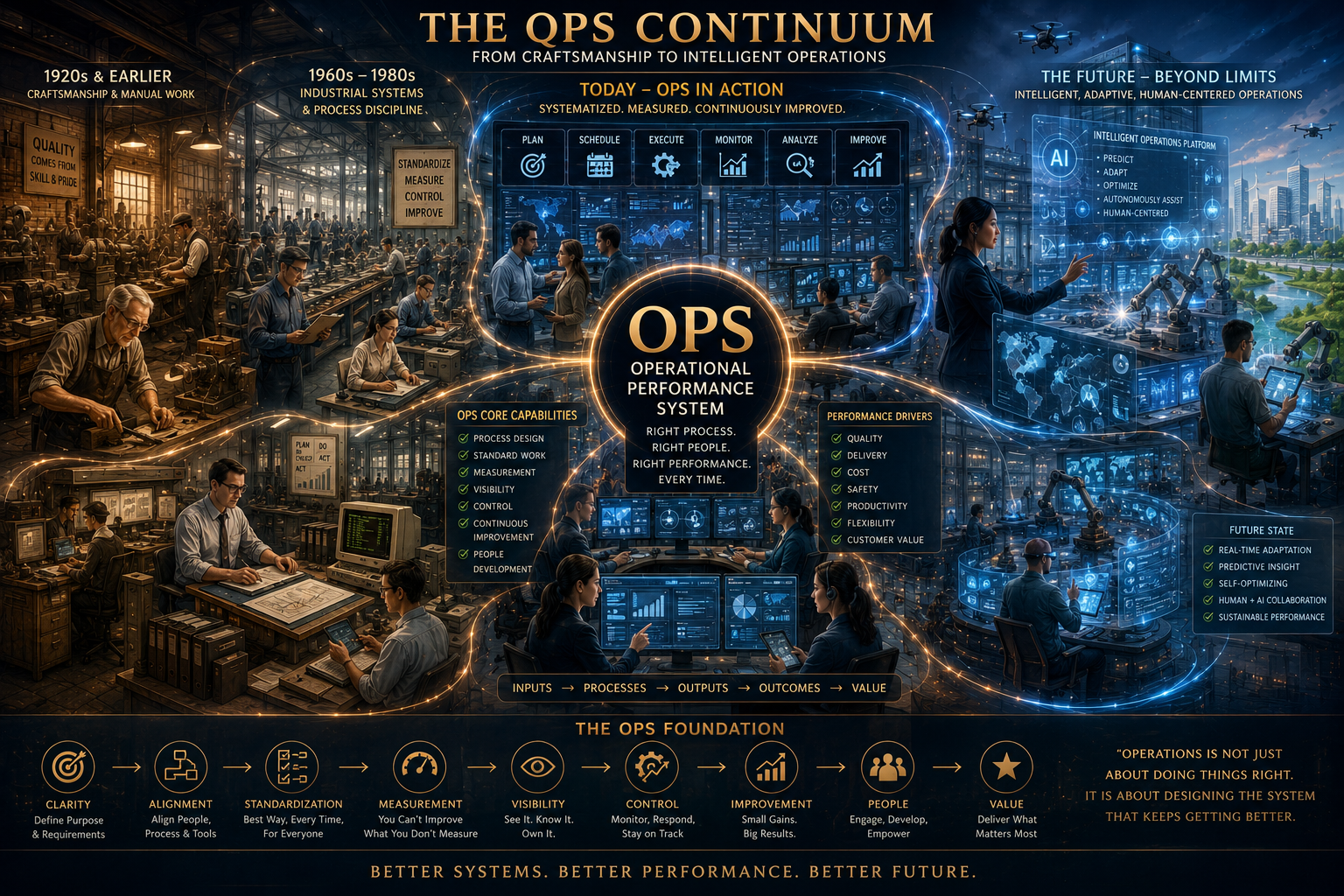
Operational Performance System is the architecture that turns intention into recurring work. Organizations often know what should be done and may even have capable people, yet performance remains inconsistent because responsibilities, rhythms, measurements, reviews, and follow-through are not organized into a dependable operating system.
Historically, operations were managed with schedules, shift boards, checklists, gauges, production logs, route sheets, maintenance records, standard operating procedures, supervisor rounds, and daily meetings. These tools created visibility and discipline long before digital systems existed. Modern operations add real-time data, dashboards, workflow systems, sensors, collaboration platforms, automated alerts, and increasingly intelligent coordination.
OPS brings these ideas together around a simple question: what must happen repeatedly for the organization to perform well? It defines recurring cycles, responsibilities, expected outputs, review points, exceptions, escalation paths, and measures. It is interested not only in whether a task was completed, but whether the operating rhythm is producing stable and improving results.
A strong operational system also creates learning. When performance deviates, the organization should be able to determine whether the issue came from knowledge, capability, process design, resources, timing, leadership, measurement, or an external condition. The operating cycle therefore becomes a feedback mechanism rather than merely a checklist.
Within TOKORAI, OPS is where knowledge and capability become visible in action. TOK provides the operating knowledge, HCA develops the people, QAR helps the organization respond to changing conditions, BPA examines the resulting performance, CAS supports relationship-driven operations, and BVE connects operational capability to economic and reciprocal value.